Duplex high speed palletizer
Duplex high speed palletizer
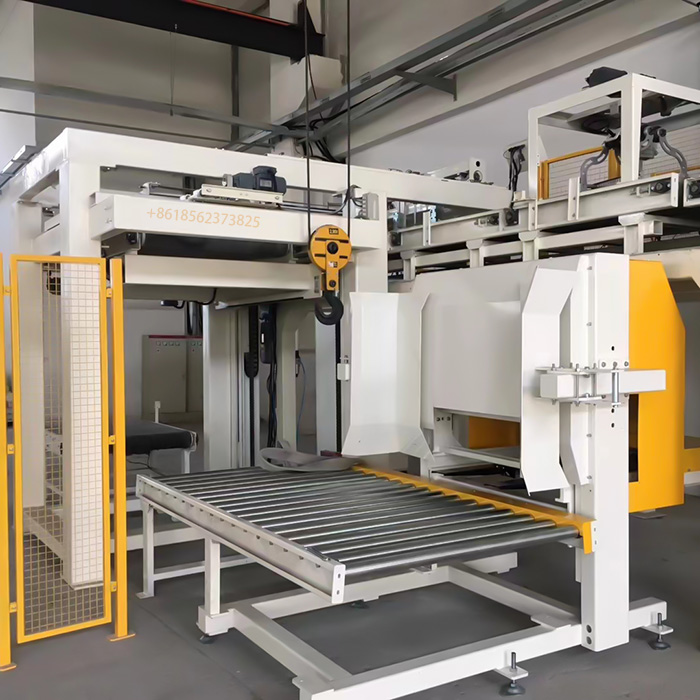
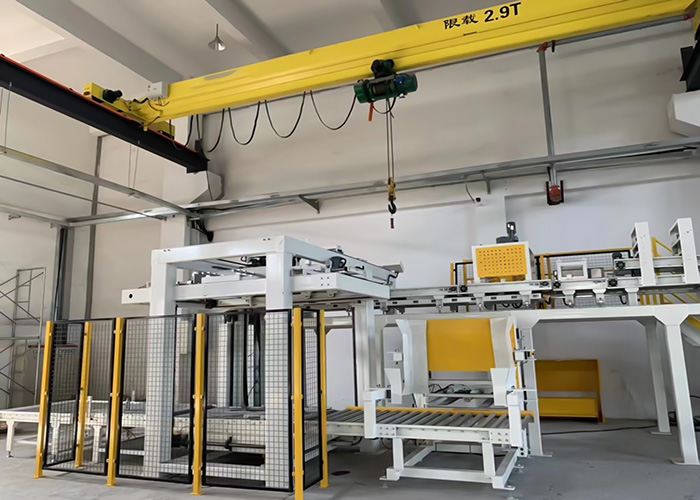
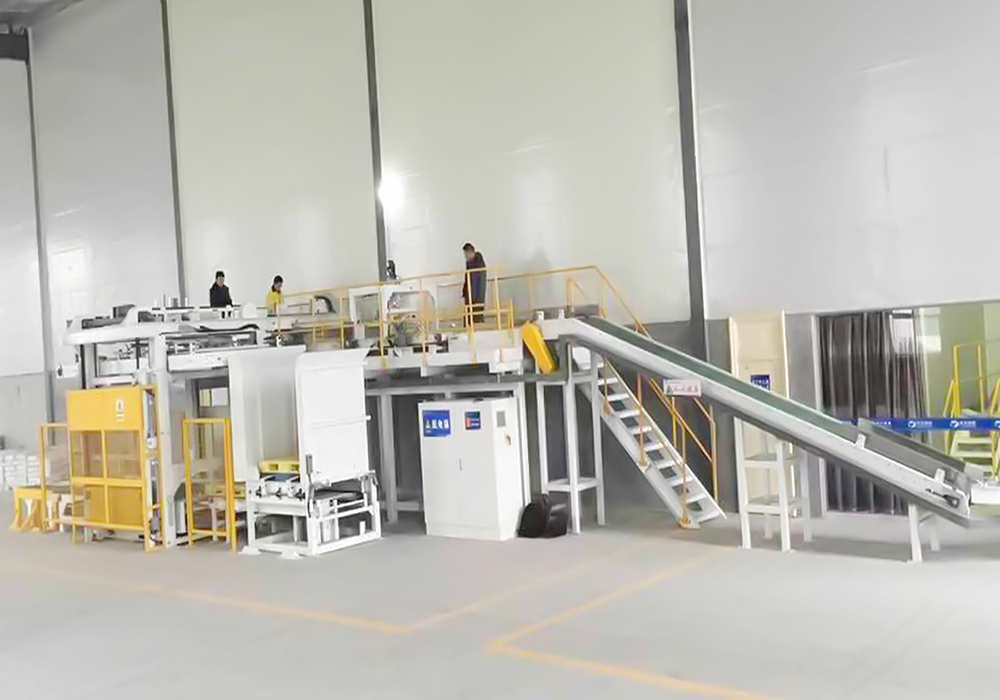
The double-station high-position palletizer produced by bremetz is a highly efficient automated equipment designed for large-scale production lines or high-density warehousing scenarios. It can handle two palletizing stations (double stations) at the same time and complete high-position stacking (usually up to 3-5 meters or more). Its core advantages are double efficiency, high space utilization, and adaptability to complex pallet types. It is widely used in chemical, food and beverage, building materials (cement)and other industries. The following is an analysis from the perspective of structural design, working mode, technical characteristics and selection points:
I. Structure and working mode
1. Mechanical composition
2. Workflow
3. Typical scenario examples
II. Core technology advantages
1. Efficient collaborative control
2. Intelligent stacking type planning and anti-collapse stacking design
3. Highly adaptable end tools
III. Typical application industries
1. Chemical and fertilizer industry
2. Food and beverage industry
3. Building materials and home furnishing industry
Duplex high speed palletizer
The double-station high-position palletizer produced by bremetz is a highly efficient automated equipment designed for large-scale production lines or high-density warehousing scenarios. It can handle two palletizing stations (double stations) at the same time and complete high-position stacking (usually up to 3-5 meters or more). Its core advantages are ** double efficiency, high space utilization, and adaptability to complex pallet types. It is widely used in chemical, food and beverage, building materials and other industries. The following is an analysis from the perspective of structural design, working mode, technical characteristics and selection points:
1. Structure and working mode
1. Mechanical composition
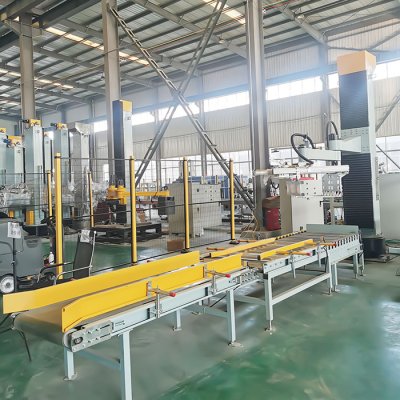
Double-station design: equipped with two sets of independent or collaborative palletizing units (such as dual robotic arms, dual lifting platforms), which can handle two conveyor lines at the same time or alternate operations.
High-position lifting mechanism: The servo motor drives the chain/screw to realize the lifting of the pallet to a high position (such as 3-6 meters) to meet the needs of three-dimensional warehousing.
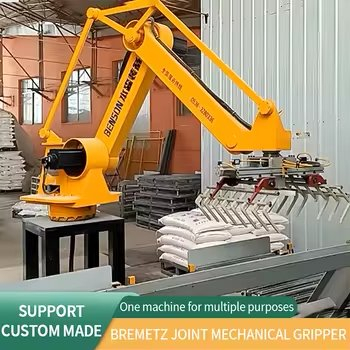
End effector: Select suction cups, grippers or mixed clamps according to the characteristics of the material (such as sponge suction cups to grab cartons, fork arm clamps to handle bagged materials).
2. Workflow
Mode 1 (alternating operation):
When station A is palletizing, station B replaces the pallet or replenishes the empty pallet, seamlessly connecting to improve efficiency (such as palletizing bagged materials in the chemical industry).
Mode 2 (parallel operation):
The dual robotic arms handle the products of two independent conveyor lines respectively, which is suitable for multi-variety and high-throughput scenarios (such as bottled/boxed mixed lines in the beverage industry).
3. Typical scenario examples
High-level palletizing of bagged materials:
The dual stations alternately stack 50kg fertilizer bags on 5-meter-high pallets, with a "tic-tac-toe cross" stacking pattern, processing 800-1000 bags per hour.
Three-dimensional storage of boxed food:
Parallel palletizing of food boxes from two production lines, directly sending them to high-level shelves, and linking with AGV to achieve unmanned warehousing.
2. Core technology advantages
1. Efficient collaborative control
The dual stations are synchronously controlled by PLC or industrial computers to avoid action conflicts and ensure beat matching (such as single-station palletizing cycle ≤10 seconds).
Using a dual servo lifting system, the lifting speed can reach 1m/s, the positioning accuracy is ±1mm, and it is suitable for high-level precise stacking.
2. Intelligent stacking type planning and anti-collapse stacking design
The built-in algorithm supports a variety of stacking types (such as stacking, rotating staggered), and automatically optimizes the inter-layer offset according to the box size and load-bearing capacity.
-The center of gravity of the stack is monitored in real time through the pressure sensor, and adjustments or alarms are triggered when abnormal shaking occurs (such as anti-dumping of tile stacking in the building materials industry).
3. Highly adaptable end tools
Suction cup + gripper composite fixture: compatible with different materials such as cartons, woven bags, and barrels, for example:
Sponge suction cups adapt to concave and convex surfaces (such as wrinkled packaging bags).
Embedded grippers grab seamless material boxes (such as chemical barrels).
Quick mold change design: Through the pneumatic quick-change interface, the fixture type can be switched within 10 minutes to adapt to multi-SKU production.
3. Typical application industries
1. Chemical and fertilizer industry
Handling 25-50kg bagged raw materials, double-station alternating palletizing to 4-meter high pallets, the pallet type is tight and moisture-proof, and supports open-air storage.
Case: A fertilizer plant uses a double-station high-position palletizer, which increases production capacity by 120% and reduces labor by 3 people/shift.
2. Food and beverage industry
High-position stacking of boxed beverages and canned foods, directly connected to the stereoscopic warehouse, and the flat pallet type meets the requirements of long-distance transportation.
Case: A dairy company's double-station palletizer achieves a production capacity of 2,000 boxes per hour and supports mixed codes of multiple box sizes.
3. Building materials and home furnishing industry
High-position palletizing of tiles and plates, using vacuum suction cups + flexible buffer devices to prevent surface scratches.
Case: The high-position palletizer of a ceramic factory has a stacking height of 5 meters, and the space utilization rate is increased by 40%.